

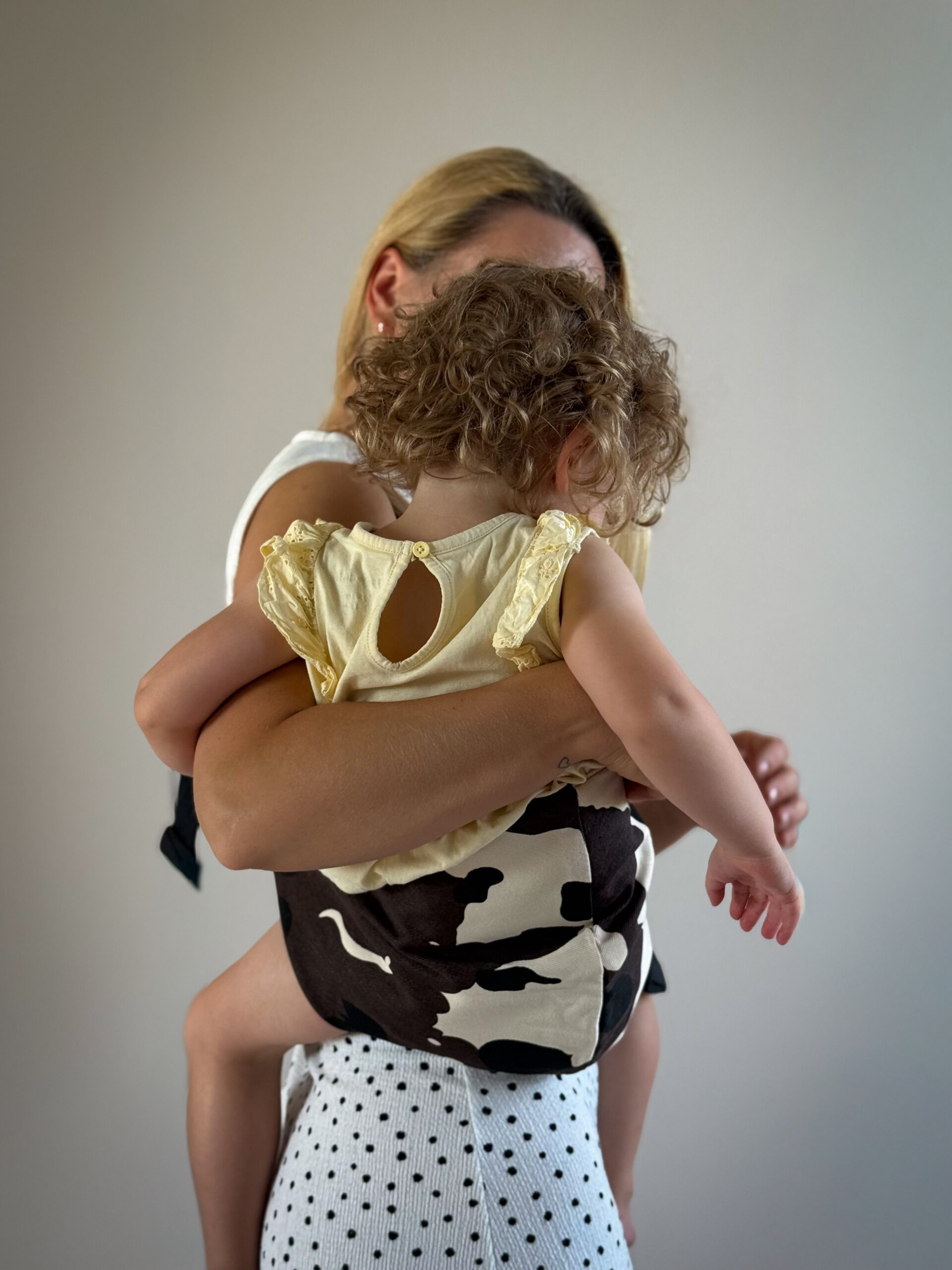
Your child’s safety always comes first. Before using your Tuvu Baby & Toddler Hip Carrier, carefully read the instructions, watch our step-by-step video and make sure the carrier is suitable for your child.
Tuvu is a supportive hip carrier—not a hands-free carrier. Always keep one arm securely around your child while carrying them.
Product manualIs Tuvu Suitable for Your Child?
The Tuvu Baby & Toddler Hip Carrier is designed for children who:
Are approximately 9 months to 4 years old
Weigh between 9 and 20 kg (20–44 lb)
Can sit unaided for an extended period
Can hold their head up independently
Do not use the carrier for a child under 9 months, over 20 kg (44 lb), or a child who cannot sit or support their head independently.
For premature or low-birthweight children, children with medical conditions, or children under one year old, consult a healthcare professional before use.
Independently Laboratory Tested
Tuvu carrier models have been independently tested against European safety guidelines, while corresponding manufacturer samples have also undergone U.S. safety testing.
European Safety Testing. Tested in accordance with CEN/TR 16512:2015—Guidelines for the Safety of Children’s Slings.
United States Safety Testing. Tested by a CPSC-accepted laboratory against: ASTM F2907-22 / 16 CFR Part 1228 and ASTM F2236-24 / 16 CFR Part 1226.
Testing covered structural integrity, chemical safety, flammability, choking, entrapment and suffocation hazards, as well as product markings and instructions.
Testing applies only to the models, materials and components covered by the relevant laboratory reports.
How to Wear Your Tuvu Securely
Watch the video below before using your carrier for the first time. Practise close to the floor or over a soft surface, and ask another adult to help until you feel confident.

01
Check the Carrier
Inspect the fabric, seams, strap, buckle and hardware before every use. Do not use the carrier if any part is torn, damaged, loose or excessively worn.
02
Position the Carrier
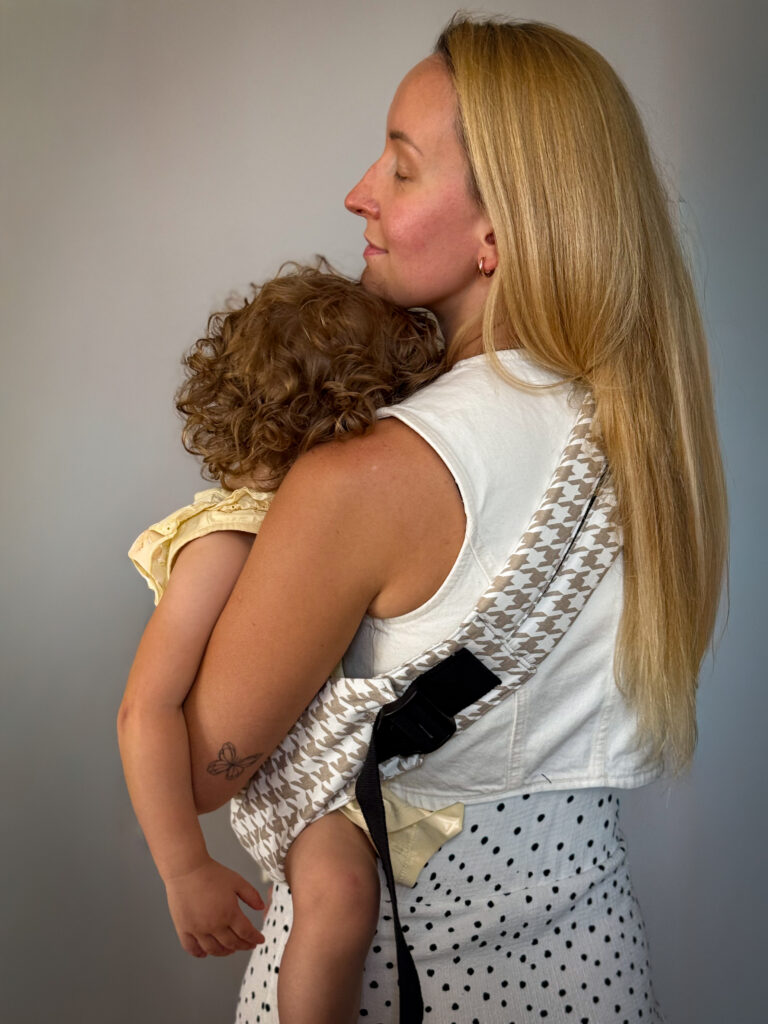
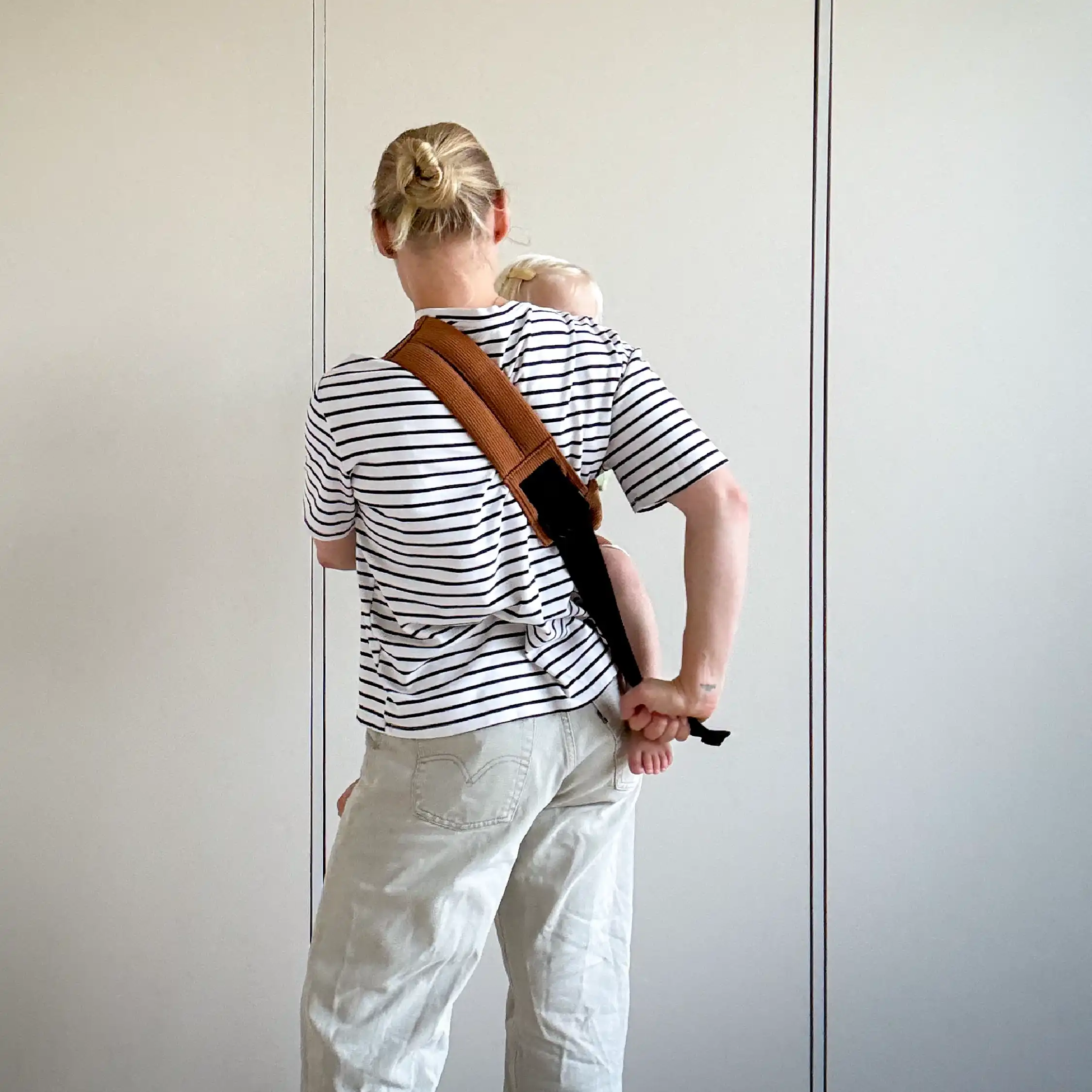
Fasten the buckle and loosen the strap. Slide the carrier over your head, place the padded strap comfortably across your shoulder and position the seat on your hip.

03
Secure Your Child
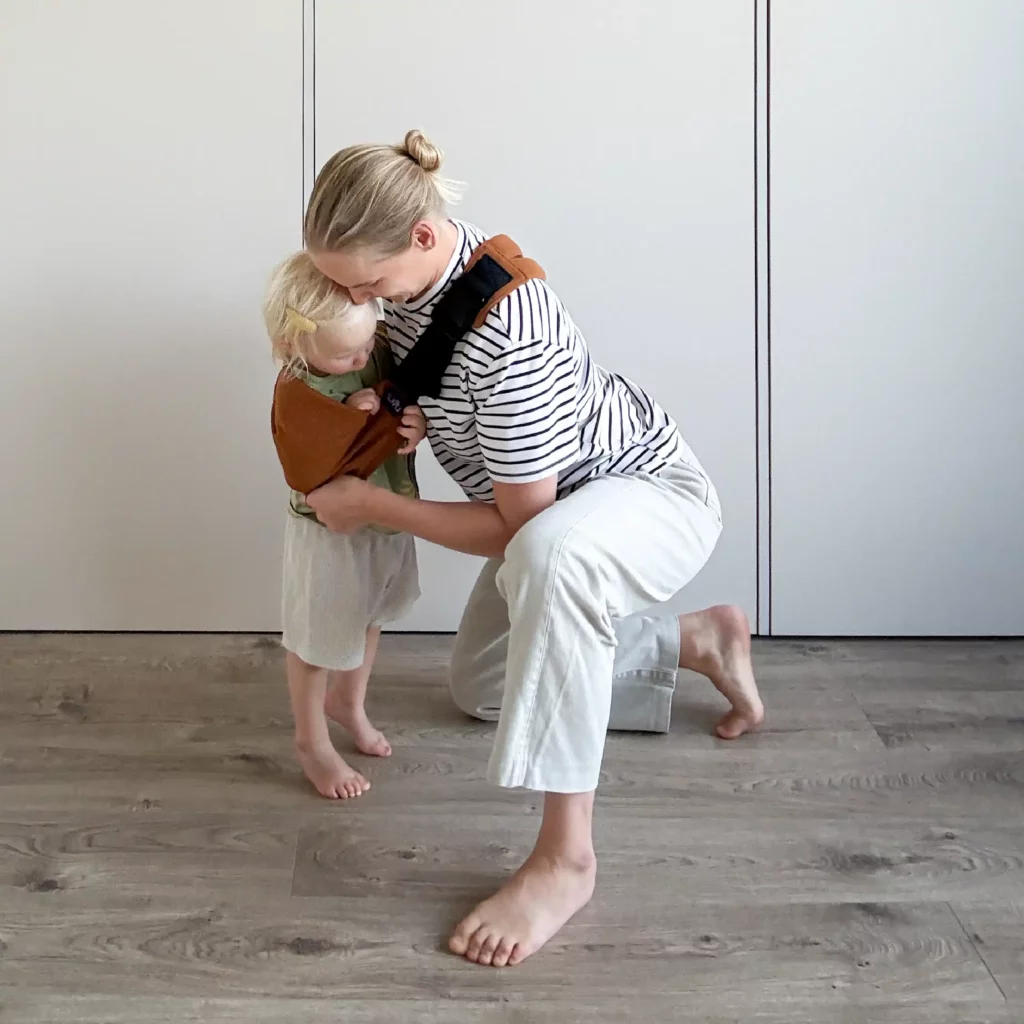
Support your child throughout the entire process. Position one leg in front of your body and the other behind you. Bring the carrier securely beneath your child’s bottom, stand up carefully and adjust the strap until your child is sitting close to you.
04
Complete the Safety Check
Before moving, make sure:
- The buckle is fully fastened and secured with the elastic loop
- The fabric supports your child’s bottom securely
- Your child is sitting close to your body
- Your child’s face, nose and mouth are completely unobstructed
- Your child’s chin is not resting against their chest
- The strap is secure but not excessively tight
- You can comfortably keep one arm around your child
Important Safety Warnings
Fall and Suffocation Hazard
Failure to follow the instructions may result in serious injury or death.
Always position your child securely and keep their nose and mouth unobstructed. Do not allow their face to press tightly against your body or their chin to rest on their chest.
Never leave a child unattended in or with the carrier.
Use Only for Everyday Carrying
Use the carrier only while walking, standing or sitting.
Never use the carrier:
- While cycling or travelling in a vehicle
- During sports, running or intensive physical activity
- In a swimming pool, shower or other water environment
- While cooking or working near fire, heat, hot liquids or chemicals
- If your balance is affected by illness, medication, tiredness, alcohol or drugs
- As a child restraint, car seat or sleeping device
Do not allow your child to sleep in the carrier. Carry only one child at a time.